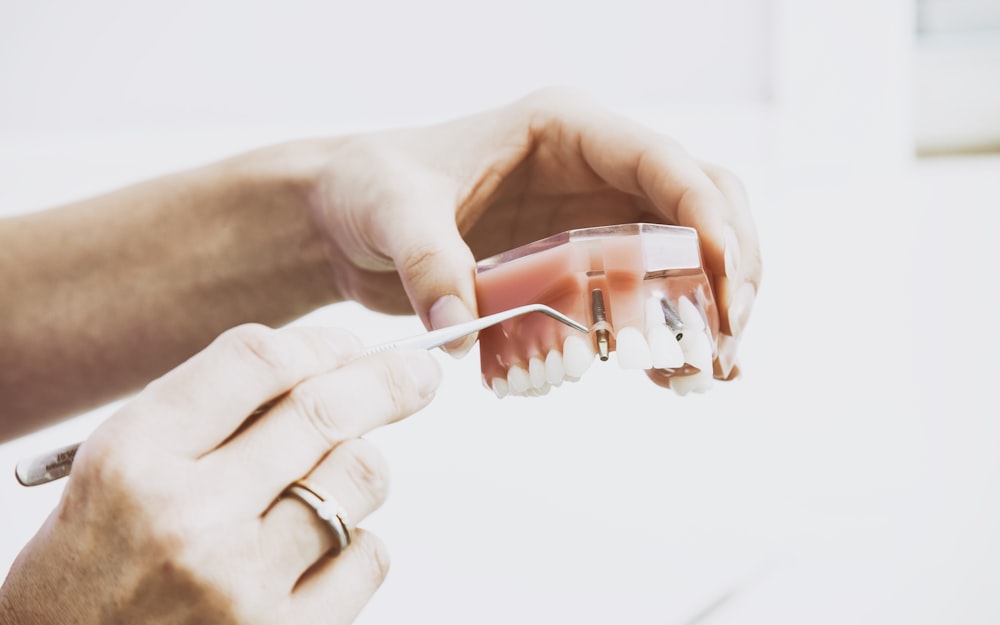
- No dark metal line at the gum
- Milled in-house on a German CAD/CAM system
- 5-year guarantee
A crown covers a tooth that has too little healthy structure left to be filled — after a root canal, a large fracture, or heavy wear. Zirconia is a ceramic that is milled from a solid block, which is why it has no dark metal edge at the gum line and no grey shadow through the tooth.
Zirconia or E-max: they are not interchangeable
This is the choice that actually matters, and it comes down to where the tooth sits in your mouth.
| Zirconia | E-max (lithium disilicate) | |
|---|---|---|
| Strength | Very high — handles molar force | High, but not for heavy grinders |
| Translucency | Good in newer generations | Best available — closest to enamel |
| Best for | Back teeth, bridges, implant crowns | Front teeth, single units |
| Tooth reduction | Moderate | Can be more conservative |
In practice many full-mouth cases use both: zirconia where the chewing happens, E-max where it shows. A clinic that offers only one material will recommend that one for everything.
What happens to the tooth underneath
A crown requires reducing the tooth all the way around to make room for the ceramic. This is irreversible, and it is the single most important thing to understand before agreeing to one. If the tooth is largely healthy and the goal is appearance, a crown is the wrong tool — veneers remove far less, and bonding removes almost nothing.
How many visits
Four to six days. Preparation and impressions on day one, a temporary crown while the permanent one is milled, then fitting and adjustment. We mill in our own laboratory, which is why the turnaround is days rather than weeks — and why a shade that comes out slightly off can be remade without a new trip.
What it costs and why it varies
Prices change with our current offers, and packages covering several teeth come with additional discounts, so message us for an up-to-date quote. The variables are the material generation (monolithic, layered, or high-translucency multilayer), whether the tooth needs a root canal or a post first, and whether it sits on a natural tooth or on an implant.
How long a crown lasts
Ten to fifteen years is a realistic expectation with good hygiene. Crowns rarely fail because the ceramic breaks; they fail because decay starts at the margin where crown meets tooth. That margin is a hygiene job for life, and it is why we check them at every recall.
Common questions
Do zirconia crowns look fake?
Older monolithic zirconia could look flat and opaque, which is where the reputation comes from. Current multilayer zirconia has graded translucency built into the block and, on back teeth, is indistinguishable in normal conversation. For a single front tooth next to natural enamel, E-max is usually the better match.
Can I have a crown without a root canal?
Often yes. A root canal is needed when the nerve is infected or dying, not because a crown is planned. Removing a healthy nerve to "prevent problems" is not good practice — it makes the tooth more brittle.
Zirconia or porcelain-fused-to-metal?
Metal-fused crowns are cheaper and still strong, but they have a metal core that shows as a dark line at the gum as gums recede over the years. On any tooth that shows, zirconia avoids that.
Will the crown stain like a natural tooth?
No — ceramic does not absorb stain the way enamel does, so coffee and tobacco do not discolour it. The consequence is that it also does not respond to whitening, so if you plan to whiten, do it before the crown shade is chosen.
What if the crown comes loose after I get home?
A crown that has debonded but is undamaged can usually be recemented by any dentist. Keep the crown, do not try to glue it yourself, and send us a photo — we will tell you whether it needs recementing or remaking.
Not sure if this is right for you?
Send us a photo. We will tell you honestly what you need — and what you do not.