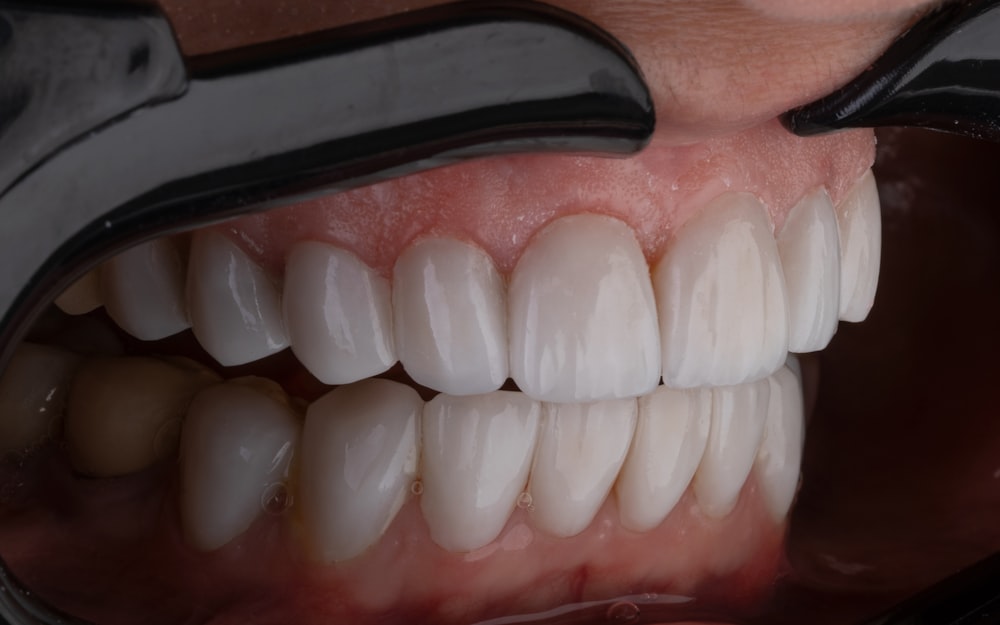
- No enamel removed — fully reversible
- Finished in a single appointment
- Sculpted by hand, shade-matched to your teeth
Bonding builds a tooth back up with tooth-coloured composite resin, shaped and cured directly in your mouth. No laboratory, no impressions, no temporary — it is finished in the same appointment.
Why it is the most underused treatment we offer
Bonding usually removes little or no enamel. That single fact makes it the most conservative option on this page, and it is why we will suggest it even when a more expensive treatment is on the table. If bonding can achieve what you want, veneers are the wrong recommendation — you would be cutting healthy tooth to solve a problem that did not require it.
What it handles well
- Chipped edges and small fractures
- Gaps between front teeth, especially a single midline gap
- Worn incisal edges from grinding or age
- Small discoloured spots that whitening does not lift
- Reshaping a tooth that is narrower or shorter than its neighbour
Where it reaches its limit
Composite is not as strong or as stain-resistant as ceramic. On a large restoration taking full biting force, or on someone who drinks a lot of coffee and smokes, it will discolour and wear faster than porcelain. For a full smile transformation across eight or ten teeth, ceramic is the more durable answer.
Bonding compared with the alternatives
| Bonding | Veneers | Crowns | |
|---|---|---|---|
| Enamel removed | None to minimal | 0.3–0.7 mm front only | All round |
| Appointments | 1 | 2–3 over 5–7 days | 2 over 4–6 days |
| Reversible | Largely yes | No | No |
| Typical lifespan | 4–8 years | 10–15 years | 10–15 years |
| Stains over time | Yes | No | No |
Cost and time
One visit. Prices change with our current offers, so message us for an up-to-date quote. Because there is no lab stage, bonding is the one cosmetic treatment that can be done properly on a short trip.
Making it last
Polished composite stays bright far longer than unpolished. We repolish at recall visits, which takes minutes and restores most of the lustre. Avoid opening things with your front teeth — composite chips where enamel would too, and it chips at the join.
Common questions
How long does bonding last?
Four to eight years for front teeth with reasonable care. Unlike ceramic it can be repaired rather than replaced: a chipped edge is usually added to and repolished in one short visit.
Does bonding stain?
Yes, gradually — coffee, tea, red wine and tobacco all show on composite where they would not on porcelain. Polishing removes surface staining; deep staining after several years means replacing the composite.
Can bonding close a gap between my front teeth?
A small to moderate gap, yes, in one appointment. A wide gap closed with composite alone produces teeth that look too broad, so beyond a certain width aligners to move the teeth first give a much better result.
Is bonding cheaper because it is lower quality?
It is cheaper because there is no laboratory and no ceramic. Within its limits — small repairs, edges, gaps — a well-done composite restoration is excellent dentistry, not a compromise.
Can bonding be removed later?
Largely yes, which is its main advantage. Because little or no enamel was removed, a bonded tooth can usually be returned close to its original state, or upgraded to a veneer later without extra loss.
Not sure if this is right for you?
Send us a photo. We will tell you honestly what you need — and what you do not.