- Swiss and German implant systems
- Guided surgery from a 3D CBCT scan
- Lifetime guarantee on the implant fixture
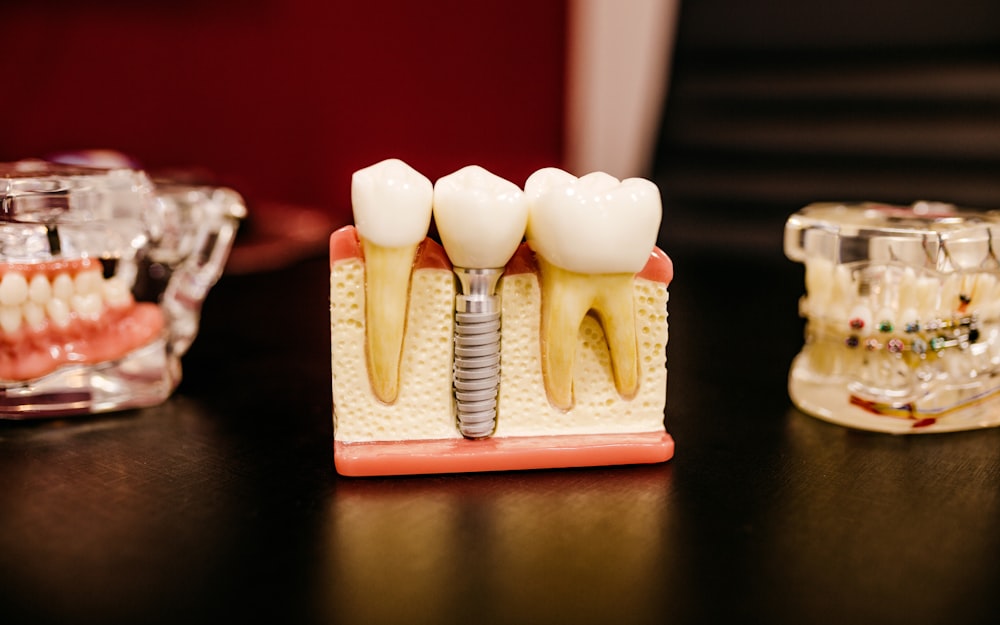
A dental implant replaces the root of a missing tooth, not just the visible part. A titanium post is placed into the jawbone, left to fuse with it, and then a crown is fitted on top. That fusion is what makes an implant behave like a natural tooth: it takes chewing force directly into the bone instead of leaning on the teeth beside it.
Who an implant suits
Anyone missing one tooth, several teeth, or all of them. The two things that matter more than age are bone volume and gum health. Heavy smokers, uncontrolled diabetics and people on certain bone medications need a longer conversation first — not because implants are impossible, but because healing is slower and the plan changes.
What happens, step by step
- 3D scan and plan. A CBCT scan shows the bone in three dimensions. This is where we find out whether a graft is needed, and where exactly the implant can sit.
- Placement. Local anaesthetic, roughly 30–60 minutes for a single implant.
- Healing. Three to six months while the bone grows onto the implant surface. You are not toothless during this — a temporary is fitted where the gap shows.
- The crown. Impressions, then a permanent crown in zirconia or porcelain. See zirconia crowns for the material choice.
How many visits, how many days
Two trips, because bone healing cannot be rushed. This is the honest version — a clinic promising implant and final crown in one week is either using immediate loading (which suits a minority of cases) or cutting the healing short.
| Stage | Days in İzmir | When |
|---|---|---|
| Consultation, scan, implant placement | 3–4 days | First visit |
| Healing | — | 3–6 months, at home |
| Impressions and final crown | 5–7 days | Second visit |
What decides the price
We do not publish a fixed price: prices change with our current offers, and treatment packages come with additional discounts, so message us for an up-to-date quote. For your own case the figure moves for four reasons, and any clinic quoting you a single number without asking about these has not looked at your case:
- Implant brand — Swiss and German systems cost more than Korean ones, and have longer track records and better parts availability years later.
- Bone grafting or a sinus lift — needed when the bone has shrunk after a tooth has been missing for a long time.
- The crown on top — zirconia, porcelain-fused, or a full-arch bridge.
- Number of implants — a full arch does not need one implant per tooth.
How long they last
Two different parts, two different lifespans. Studies following implants over ten years put fixture survival above 95%. The crown on top is a wearing part and typically needs replacing after 10–15 years. We guarantee the implant fixture for life; the crown carries its own separate warranty.
Alternatives worth knowing about
An implant is not the only answer. A bridge is faster and cheaper but requires cutting the healthy teeth on either side. A partial denture is cheapest and removable. If you are replacing a front tooth for appearance rather than function, veneers may be solving a different problem entirely — worth ruling out before surgery.
Common questions
Is implant surgery painful?
Placement is done under local anaesthetic and most patients describe it as easier than a filling. Mild soreness for two or three days afterwards is normal and handled with ordinary painkillers. Swelling peaks around day two and settles from there.
Can I fly straight after implant surgery?
Yes — flying does not affect an implant. We normally ask for one clear day between surgery and your flight so we can check the site before you leave, and because bleeding, if any, is easier to manage on the ground than at altitude.
What if I do not have enough bone?
Then a graft or sinus lift is planned before or during placement. This is common and not a setback, but it adds cost and usually a few months to the timeline. The CBCT scan tells us before you travel, not after you arrive.
Will the implant look different from my other teeth?
The crown is matched to the shade and shape of the teeth around it. On a single front tooth this is the hardest thing in dentistry to get right, and it is worth asking to see cases the clinic has done in that exact position.
What happens if something goes wrong once I am home?
The fixture guarantee applies wherever you are. In practice most post-treatment issues are minor and can be handled by a local dentist with our records and X-rays, which we send you. Anything involving the implant itself we handle here.
What patients say
I was so nervous but they made me feel at ease the entire time. Life-changing.
From airport pickup to final check-up, everything was seamless. Highly recommend.
Not sure if this is right for you?
Send us a photo. We will tell you honestly what you need — and what you do not.